
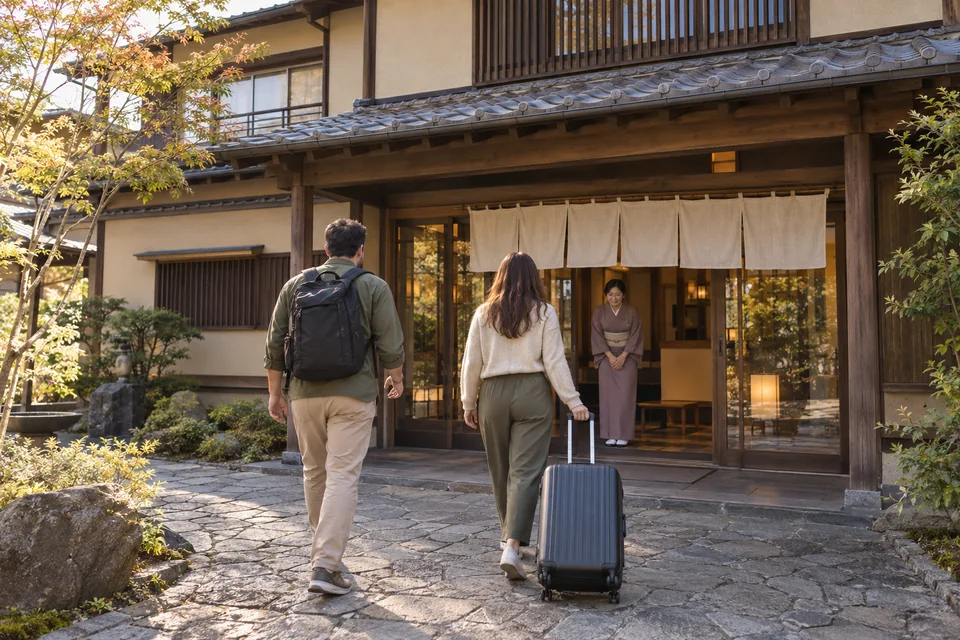
Start with the simple version
You do not have to memorize a long list of rules to enjoy a ryokan. The most useful preparation is knowing what you booked and giving the inn enough time to prepare for you.
- Check which meals your plan includes.
- If dinner is included, arrive before its service window.
- Take off your shoes where the ryokan asks you to.
- A yukata is usually an option, not a uniform you must wear.
- Consider the inn’s dinner if your budget and dietary needs allow it.
- Ask the staff whenever you are unsure.
Start with those six checks. Everything else below explains what happens next, so you can spend less of the evening wondering whether you are doing it wrong.
- ArrivalConfirm times
- RoomSettle in
- BathIf you want
- DinnerYour booked time
- FutonCheck setup
- BreakfastIf included
- CheckoutPlan onward travel
A possible flow, not a timetable. Bathing can come before or after dinner; your inn sets the meal and checkout times.
What exactly is a ryokan?
A ryokan is a Japanese inn. In a traditional stay, the room, meals, bathing facilities and hospitality often work together as one experience. You might sit down to tea in a tatami room, change into a cotton yukata, have dinner at the inn and return to find your bedding ready.
That is a familiar pattern, not a checklist every property must pass. Ryokan range from small town inns to large resorts, with Japanese-style, Western-style or mixed rooms. Some have natural hot-spring baths; others do not. Some put food at the center of the stay; others sell a simple room-only plan.
Think of “ryokan” as a starting point for choosing an experience. The room description and meal plan tell you what you are actually reserving. A wooden doorway in the photos does not tell you whether dinner, a private bath or a bed is included.
One more thing: you do not have to keep sightseeing after check-in. At many ryokan, tea, a bath, dinner and a quiet evening really are the plan. Check what your inn actually offers, then give yourself permission to slow down.
- Check in
- Settle in / tea
- Bath
- Dinner
- Futon setup
- Sleep
- Breakfast
- Check out
Sources: JTA · Ryokan introduction (Japanese) · JNTO · Japanese Ryokan Guide
Before you book: check the room and the plan
Look at the exact room category as well as the property. The same inn may offer a tatami room with futons, a room with Western beds and a mixed room with both. If getting down to the floor, using stairs or sitting at a low table is difficult for you, ask about the actual room, dining seating and route through the building before paying.
Check the bathroom details separately: Is there a private toilet? A shower? A bathtub? A communal bath elsewhere? A booking label such as “shared bathroom” may not explain all four. Ask the property to clarify the room you intend to book instead of assuming that a bath photo shows your private bathroom.
Then read the meal plan. “Breakfast included” does not mean dinner is included, and a “two-meal” plan usually refers to dinner and breakfast for that night’s stay. Confirm meals for every adult and child, check-in and checkout times, cancellation terms, payment arrangements and access. Keep a copy of the booking details you will need on arrival.
- Meals
- Dinner included?
- Breakfast included?
- Your room
- Futon or bed?
- Private toilet?
- Shower / bath in room?
- Shared bath?
- Arrival
- Check-in time?
- Shuttle available?
- Two meals
- Dinner + breakfastCheck both meal windows and dietary arrangements.
- Breakfast only
- Breakfast, no dinnerPlan where to eat in the evening and how to get back.
- Room only
- No meals includedCheck nearby food options before arrival.
Availability depends on the inn. Read your exact booking, not just the room photo.
Sources: JTA · Ryokan Q&A
Why does the price sometimes change per person?
A ryokan quote may be per person, per night, especially when meals are included. The number of guests can therefore change the total even when everyone shares one room. Food and the services attached to a stay help explain why this can look different from a hotel’s room-only price.
Other inns charge by the room or offer different combinations. Before comparing two prices, put them on the same basis: the same number of travelers, the same number of nights and the same meals. Check the final booking total and any charges identified separately by the property; do not multiply or divide an unexplained headline price and hope for the best.
Include every child in the reservation and read the inn’s child meal and bedding options. They are not one nationwide age or pricing rule. Solo travelers should search with one guest from the start, since the room or plan available for two may not be offered on the same terms for one.
Sources: JTA · Ryokan Q&A
If this is your first ryokan stay, consider dinner
Our suggestion: if the price works for you and the inn can accommodate your dietary needs, consider a dinner-inclusive plan for your first stay. It lets you experience more than the room, and it removes the need to find dinner after arriving somewhere unfamiliar. It is an option worth considering, not a requirement for a “proper” visit.
Meals can highlight seasonal ingredients, local specialties and the kitchen’s way of serving them. Some inns offer kaiseki-style dinners: multiple carefully presented courses, often with different cooking methods and flavors. Other plans may be simpler, buffet-style or quite different. Read the actual meal description rather than expecting a feast from the word “ryokan.”
Also check where dinner is served. In-room dining, a shared dining room and a private dining space are different arrangements; none is guaranteed by a room photo. If a meal-free plan suits you better, check nearby restaurants, opening hours and your return route before the stay. A quiet location is lovely until you realize you have not made a food plan.
Sources: JNTO · Japanese Ryokan Guide · JNTO · Japanese kaiseki cuisine
Tell the ryokan about dietary needs early
Tell the ryokan about dietary restrictions before your stay. Contact it at booking if possible, rather than waiting for the first plate. Prepared menus and ingredients can make last-minute changes difficult, and a request is not a confirmed arrangement until the inn replies.
Explain exactly what you cannot eat and why: an allergy, vegetarian or vegan requirements, religious restrictions, gluten avoidance or a preference to avoid raw fish. These are different requests. Be specific about ingredients such as fish-based stock, eggs, dairy or alcohol when they matter to you. “Vegetarian” by itself may not communicate your full requirements.
For an allergy, ask whether the kitchen can accommodate the named allergen and whether cross-contact can be avoided. Do not treat an ingredient substitution as a guarantee that a meal is safe. A ryokan may be unable to meet your needs; that is something to discover before committing to a meal plan.
You can write: “One guest cannot eat [ingredient] because of [allergy/dietary requirement]. Can you accommodate this for dinner and breakfast? Please confirm before we book.” Keep the reply with your booking. If it cannot be confirmed, choose a suitable alternative property or a meal-free plan with food options you can actually use.
Sources: JTA · Ryokan Q&A
Getting there may be part of the plan
Check the journey all the way to the entrance. A ryokan in a rural or hot-spring area may be some distance from the station, and the final leg can need a bus, taxi, arranged pickup or rental car. Save the address, a map and the inn’s contact details so you are not relying on a perfect mobile connection.
Some properties offer a shuttle or pickup; others do not. If one is offered, ask which station and meeting point to use, when it runs, how to reserve it, and what happens if your train is late. “Pickup available” does not necessarily mean a vehicle will be waiting whenever you arrive.
Build your arrival around the confirmed final connection and dinner window. Check the last useful bus or pickup before making sightseeing plans for that afternoon. For the rail part, the ordinary-train guide explains how to find and board the right service.
Sources: JTA · Ryokan Q&A
Arrive before dinner
Many ryokan begin check-in around 3 or 4 p.m., but your booking sets the actual time. If dinner is included, do not treat arrival time as an afterthought. Meal service has a window, and a late arrival can mean missing part or all of it.
If dinner is included, arrive before the meal service window. Ask for the latest arrival time that works with your meal, not merely the latest time reception can give you a key. Leave room in the day for the final transfer and check-in.
If a delay develops, contact the inn promptly, give your reservation name and expected arrival time, and ask what is still possible. Do not assume that dinner can be saved, moved later or refunded. If you intentionally need a late arrival, arrange it before booking and consider whether a meal-free plan is more suitable.
At check-in, confirm dinner and breakfast times, their locations, bath hours and any bedding setup. That brief conversation saves several small mysteries later.
Sources: JTA · Ryokan Q&A
At the entrance: watch your shoes
At a shoe-removal entrance, step out of outdoor shoes before moving onto the raised indoor floor. Use the footwear the ryokan directs you to use. Some properties keep shoes on through reception and ask you to remove them at the guest room instead, so look for the change in floor level or follow the staff’s guidance.
If slippers are provided for corridors, take them off before stepping onto tatami. Keep your suitcase on the designated hard-floor or luggage area rather than rolling it across the mats. If the boundary is unclear, pause and ask where the bag should go.
That is enough to get started. You do not need to identify every feature of a Japanese room before you are allowed to enjoy it.
Sources: JNTO · Customs and manners
Your room may look surprisingly empty
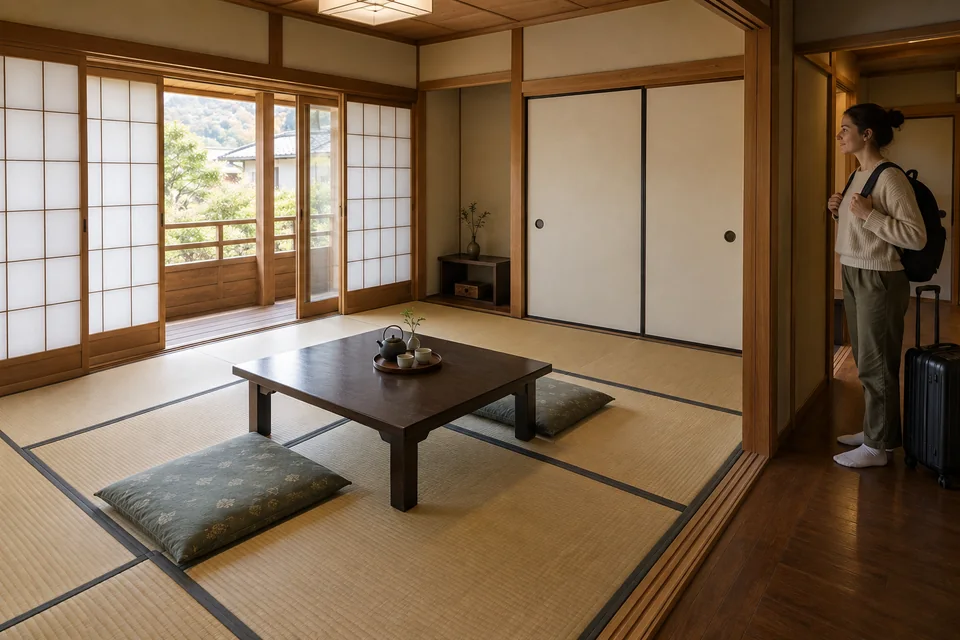
A traditional tatami room may greet you with a low table, cushions and a tea set, with no obvious bed. No, the ryokan probably did not forget your bed. The space can serve as a sitting room during the day and a sleeping room at night.
The bedding may be stored until later, or staff may prepare it at an agreed time. Some rooms already have beds; others have a separate sleeping area. Check what your room uses instead of searching every sliding door for a mattress.
Settle in, find the information about meals and baths, and ask whether staff will set up the futon. If you need a chair or want to keep the room undisturbed, now is a useful moment to ask what can be arranged.
Sources: JNTO · Japanese Ryokan Guide · Ryokan Association · Futon (archive)
What is the yukata for?
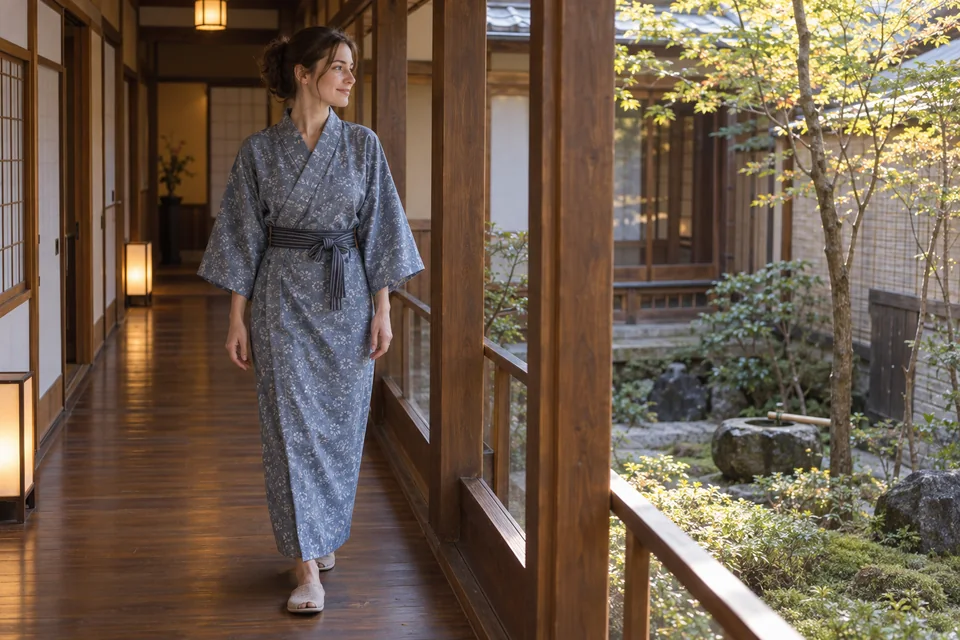
A yukata is a lightweight cotton robe you may find in the room. It is relaxed clothing for the stay, often worn around the inn and sometimes to dinner. You can usually stay in your own comfortable clothing if you prefer. Ask if a particular dining venue has different expectations.
For a simple wrap, put your right panel against your body first, then your left panel over it, and tie the sash so it stays closed comfortably. Left over right means your own left side, not the left side of a person facing you. If the yukata does not fit comfortably, ask whether another size is available. If the fit or tying feels puzzling, ask the staff to show you.
Outside use depends on the inn and the surrounding town. Do not assume the yukata and indoor slippers are suitable for every street, restaurant or outing. Confirm before stepping out. Wearing one should make the evening easier, not give you a new reason to worry.
Sources: Ryokan Association · Yukata (archive) · JNTO · Customs and manners
Ryokan dinner is part of the experience
Dinner can begin with several small dishes already arranged in front of you, followed by more during the meal. A kaiseki-style dinner is a sequence of courses with attention to the season, ingredients, cooking and presentation. It is not simply a large sushi platter, and the exact menu depends on the inn and plan.
“Is all of this for me?” is a reasonable question. Ask whether the dishes are your individual meal or for sharing, and whether more courses are coming. Do not underestimate a dinner that arrives one small plate at a time. Several modest portions can add up.
Expect variety rather than a fixed national menu: perhaps a grilled dish, vegetables, soup, rice and a small selection of fish or other local ingredients. Some items arrive hot or cook at the table. Let staff explain what is ready and ask before handling unfamiliar tabletop cooking equipment.
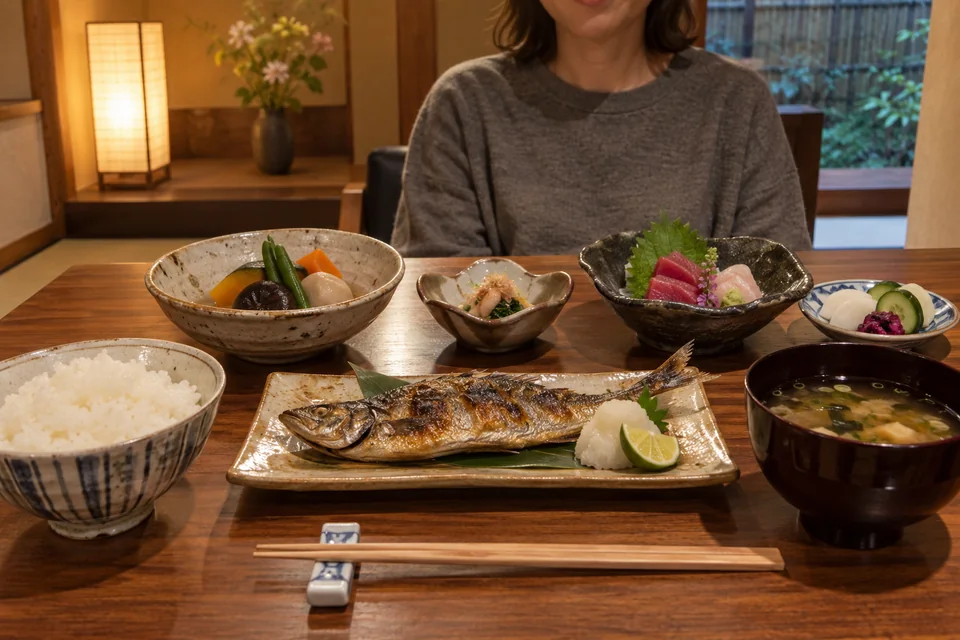
If you are full, tell the staff kindly. If an ingredient is unsuitable, explain rather than forcing yourself to eat it; a new allergy concern still needs a direct conversation about safety. You do not have to clear every plate to prove that you appreciate the meal. Asking about portions in advance may help, but smaller servings, substitutions and takeaway are not guaranteed. Do not assume leftovers can be packed or safely kept in your room.
Sources: JNTO · Japanese kaiseki cuisine · JNTO · Japanese Ryokan Guide
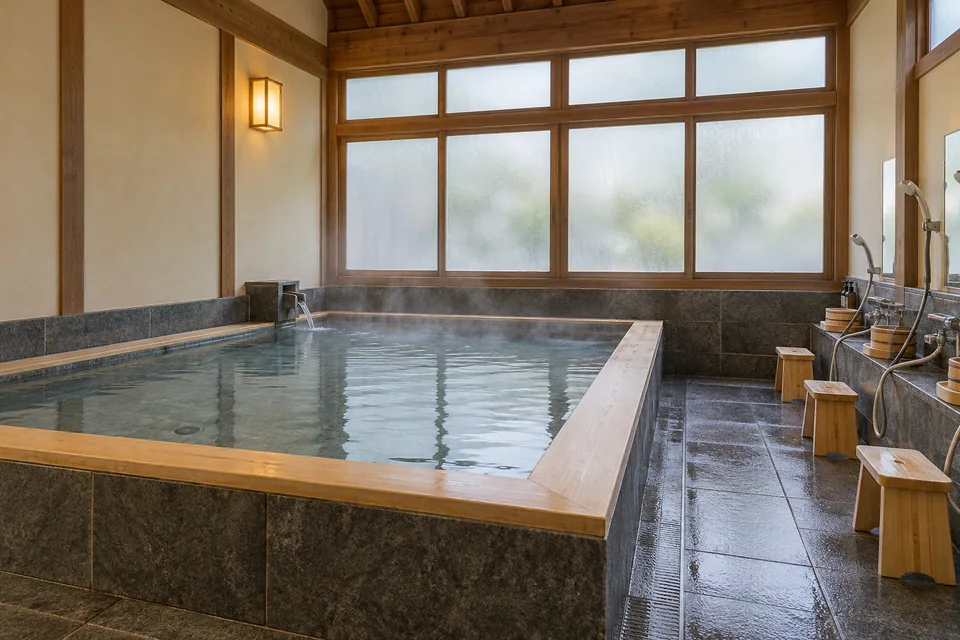
A quick bath before or after dinner
Bathing may be part of the stay, but not every ryokan has an onsen. “Onsen” refers to natural hot-spring bathing; a communal bath is not automatically one. Your property might have shared bathing facilities, a bookable private bath, an in-room bath or a different arrangement.
At check-in, ask which bath you may use, its hours and whether a reservation is needed. Read the posted instructions before entering. If shared bathing is not comfortable for you, confirm a suitable private option before booking; a private toilet or shower does not necessarily mean a private soaking bath.
Choose a bath time that fits your meal. There is no need to turn the first evening into a race between the tub and the dining room. This guide covers the place of bathing in the stay; follow your inn’s instructions for the bath itself.
Sources: JTA · Ryokan Q&A · JNTO · Japanese Ryokan Guide
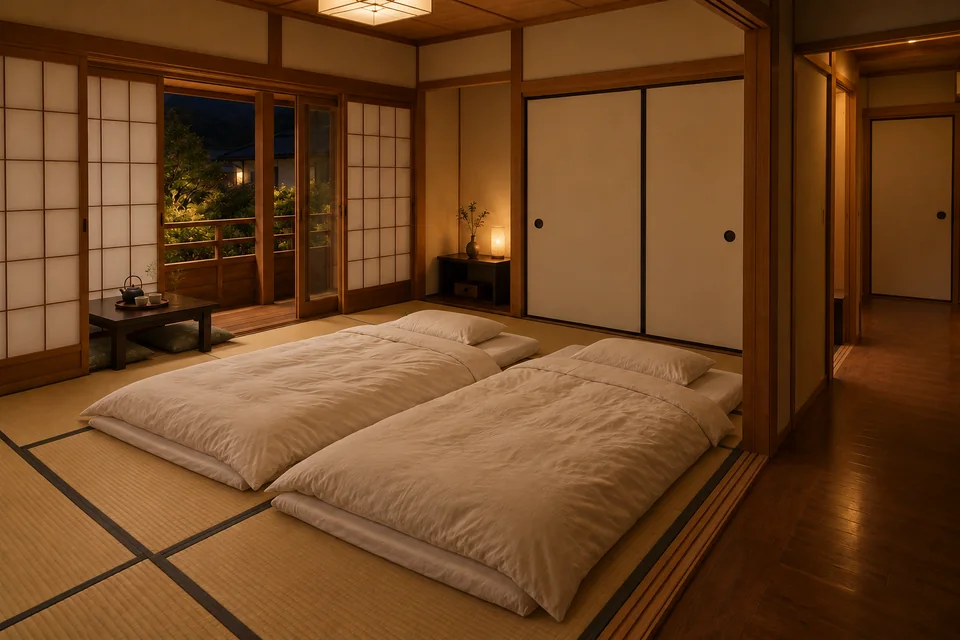
You left a sitting room. You came back to a bedroom.
At some ryokan, staff enter to move the table aside and lay out futons while you are at dinner or out of the room. It is a normal service arrangement when the inn provides it, not a sign that you were meant to make your own bed and failed.
Ask when bedding will be prepared and whether staff will enter your room. Tell them if you would prefer a different time or need privacy, and confirm what they can arrange. Some properties use another setup, leave the bedding ready or ask guests to lay it out themselves.
Keep valuables and documents secure as you would at any accommodation. Leave clear space for the bedding and ask about the setup before trying to move heavy furniture. Knowing the plan makes the room’s evening transformation rather pleasant.
Sources: Ryokan Association · Futon (archive)
Sleeping on a futon
A traditional futon is bedding laid directly on tatami, rather than a raised bed frame. For a first night, the useful question is whether that sleeping arrangement works for you, not whether you can be persuaded to enjoy it.
If getting down to the floor is difficult, look for a bed-equipped room before booking. Ask about the bed height, room access and bathroom layout if those details matter. The label “Japanese-Western room” is helpful, but photos and confirmation of the exact category are better than a guess.
A room swap on arrival is not assured. Choose suitable bedding early, then ask staff if the prepared futon needs an adjustment. Comfort is a practical part of planning the stay, not a test of cultural commitment.
Sources: JTA · Ryokan Q&A · Ryokan Association · Futon (archive)
Can I go out again at night?
Often you can, but check the inn’s arrangements before leaving. Some have no curfew; others close the entrance, use a night key or have limited reception hours. A quiet traditional building does not tell you which system applies.
Ask when the door closes, whether you need a key and how to contact staff if necessary. Also check the last return bus or other workable transport if you are going beyond walking distance. Carry the address and contact details with you.
If you plan to go out in the yukata, ask about that separately. Permission to leave the inn is not automatically permission to wear its indoor footwear outside.
Sources: JTA · Ryokan Q&A
Morning at a ryokan
Breakfast can be another part of the experience, rather than something to grab on the way out. A Japanese-style meal may include rice, miso soup, grilled fish, pickles, an egg or tofu dish, or seaweed. These are examples, not a menu every inn promises.
Other properties or plans may offer a buffet, a Western-style option or no breakfast. Confirm what is included and raise dietary needs for this meal as well as dinner. A breakfast change is not something to assume the kitchen can arrange when you sit down.
Check the location and time the evening before. If your onward train requires an early departure, ask in advance whether breakfast fits; do not rely on a takeaway box or early service without confirmation. Leave yourself time to pack after the meal.
Sources: Ryokan Association · Breakfast (archive) · JTA · Ryokan Q&A
Check-out and luggage
Follow the checkout time in your booking. Check how payment works before the stay: prepaid, paid at the inn or a combination. Before leaving, review any remaining charges and return the key or other items as instructed. Do not assume your preferred payment method is accepted.
If you want to leave luggage before check-in or after checkout, ask about eligibility, available space and the latest collection time. Storage is a property arrangement, not a service every ryokan must provide. The same applies to having forwarded luggage arrive: get the inn’s agreement first.
Plan the next connection while you still have a reliable way to ask. Confirm any departure shuttle, keep valuables and essentials with you, and check the room for chargers, documents and belongings. The Luggage Complete Guide helps if you need storage or forwarding for the next part of the trip.
Sources: JTA · Ryokan Q&A
Useful Japanese
These are short questions you can use at reception. You can point to the yukata for “how to put this on,” or show the written question if speaking feels awkward.
- What time is dinner?夕食は何時ですか?
- Yūshoku wa nanji desu ka?Ask at check-in; confirm the time you should be seated.
- Where is breakfast served?朝食会場はどこですか?
- Chōshoku kaijō wa doko desu ka?Check the breakfast location as well as the time.
- Is there a pickup service from the station?駅からの送迎はありますか?
- Eki kara no sōgei wa arimasu ka?Ask before travel; availability and reservations vary.
- Could you show me how to put this on?着方を教えてもらえますか?
- Kikata o oshiete moraemasu ka?Hold or point to the yukata so “this” is clear.
- What time does the entrance close?玄関は何時に閉まりますか?
- Genkan wa nanji ni shimarimasu ka?Ask before going out at night. It may not close.
- Thank you.ありがとうございます。
- Arigatō gozaimasu.A simple thank-you is enough.
For a food allergy or other important dietary requirement, a short phrase is not enough. Send the exact details in advance and get a clear reply about what the inn can provide.
Questions before your first stay
What is the difference between a ryokan and a hotel?
A ryokan often combines the room, food and hospitality into a Japanese inn experience. Facilities vary: tatami, futons, yukata, elaborate meals and hot springs are possibilities, not universal requirements.
Are ryokan prices per room or per person?
Both systems exist, and per-person prices are common for meal-inclusive stays. Enter the correct adults and children, check what each receives, and compare the final total for your party.
Do I have to eat dinner at the ryokan?
No, if the inn offers a plan that does not include dinner. Choose it at booking and check other food options; an included meal cannot be assumed cancellable or refundable later.
Is ryokan dinner worth trying?
We suggest considering it for a first stay if your budget and dietary needs allow it. Seasonal food and the way it is served can be part of the experience, but read the actual plan rather than expecting every inn to offer the same meal.
What if I have food allergies?
Contact the inn before booking or as early as possible, naming the allergen and asking about cross-contact. Get a clear reply; not every kitchen can accommodate every allergy, and substitutions do not guarantee safety.
Can vegetarians or vegans stay at a ryokan?
Yes, when the property and meal arrangements meet their needs. Explain exactly what you avoid and confirm dinner and breakfast in advance. If the inn cannot accommodate you, a suitable meal-free plan or another property may work better.
Do all ryokan have onsen?
No. Check whether the advertised bath uses natural hot-spring water and which facilities your plan permits you to use; “ryokan” and “communal bath” do not establish that.
Do all ryokan rooms have private bathrooms?
No; the facilities depend on the room category. Ask separately about a private toilet, shower, bathtub and any shared bathing facilities if the listing is unclear.
Will I have to sleep on the floor?
Only if that is the bedding arrangement you book. Traditional futons go on tatami, while some ryokan offer Western beds or mixed rooms. Confirm the exact room.
Can I request a bed?
You can ask, but it must be available in the room or category you reserve. Do not count on staff being able to add a bed to a futon room or change rooms at check-in.
Do I have to wear a yukata?
Usually not; comfortable regular clothes are generally an alternative. Ask about the specific dining venue or outing, and have staff show you the wrap if you want to try it.
Can I arrive late?
Only within arrangements the inn confirms, especially if dinner is included. Contact it about the latest workable arrival before booking and call promptly if you are delayed.
Can I leave the ryokan after check-in?
Usually yes, subject to the inn’s entry arrangements and your meal commitments. Ask how to get back in, check return transport and take the contact details with you.
Do ryokan have curfews?
Some do and some do not. Confirm the door-closing time, night-key procedure and staff contact before going out; do not infer the rule from the style of building.
Can I leave luggage before check-in or after checkout?
Only if the inn agrees. Ask about the dates, guest eligibility and collection deadline before making a sightseeing plan that depends on storage.
Do I need to tip?
Generally, no: a tip is not an expected extra charge for your stay. Particular gratuity customs exist, but you do not need to invent a cash amount or leave loose money to show appreciation. A sincere thank-you is appropriate.
Sources: JTA · Ryokan Q&A · JNTO · Tipping in Japan
You do not need to pass a Japanese etiquette exam to stay at a ryokan. Take off your shoes where asked, respect the space, follow the bath instructions and tell staff about food needs early. Ask when something is unclear. Then let yourself enjoy the room, the meal and the slower evening you came for.
What this guide is based on
Sources read on 2 Oct 2026. National guidance explains the experience; your booked ryokan and room plan decide the details.
- Japan Tourism Agency · Ryokan introduction (Japanese) Checked 2 Oct 2026 · English explanation is our summary of Japanese primary guidance.
- Japan Tourism Agency · Ryokan Q&A Checked 2 Oct 2026 · Property and plan differences remain explicit. No national price, guaranteed substitution or universal arrival time.
- JNTO · Japanese Ryokan Guide Checked 2 Oct 2026 · Broad visitor guidance; dated price estimates and blanket language are not reproduced.
- JNTO · Japanese kaiseki cuisine Checked 2 Oct 2026 · Describes kaiseki; does not establish that every ryokan serves it.
- JNTO · Customs and manners Checked 2 Oct 2026 · Do not generalize a facility rule from a cultural description.
- JNTO · Tipping in Japan Checked 2 Oct 2026 · No cash-tip requirement, prohibition or amount invented.
- Japan Ryokan Association · Yukata (archive) Checked 2 Oct 2026 · Historical descriptive reference, copyright 2006; not current availability or dress policy.
- Japan Ryokan Association · Futon (archive) Checked 2 Oct 2026 · Historical description only; ask the actual property about staff entry and bedding.
- Japan Ryokan Association · Breakfast (archive) Checked 2 Oct 2026 · Historical examples only, not a fixed menu or guaranteed Western option.
Association archive pages explain longstanding customs, not today’s rules at an individual inn. Confirm meal times, dietary arrangements, room facilities, bath access, pickup and luggage storage directly before your stay.