
A konbini (convenience store) can help with a quick meal, payment, printing or an ATM. For food, choose an item and take it to the indicated checkout; ask staff if you want it heated. Toilets, bins, hours and services vary by branch.
On this page
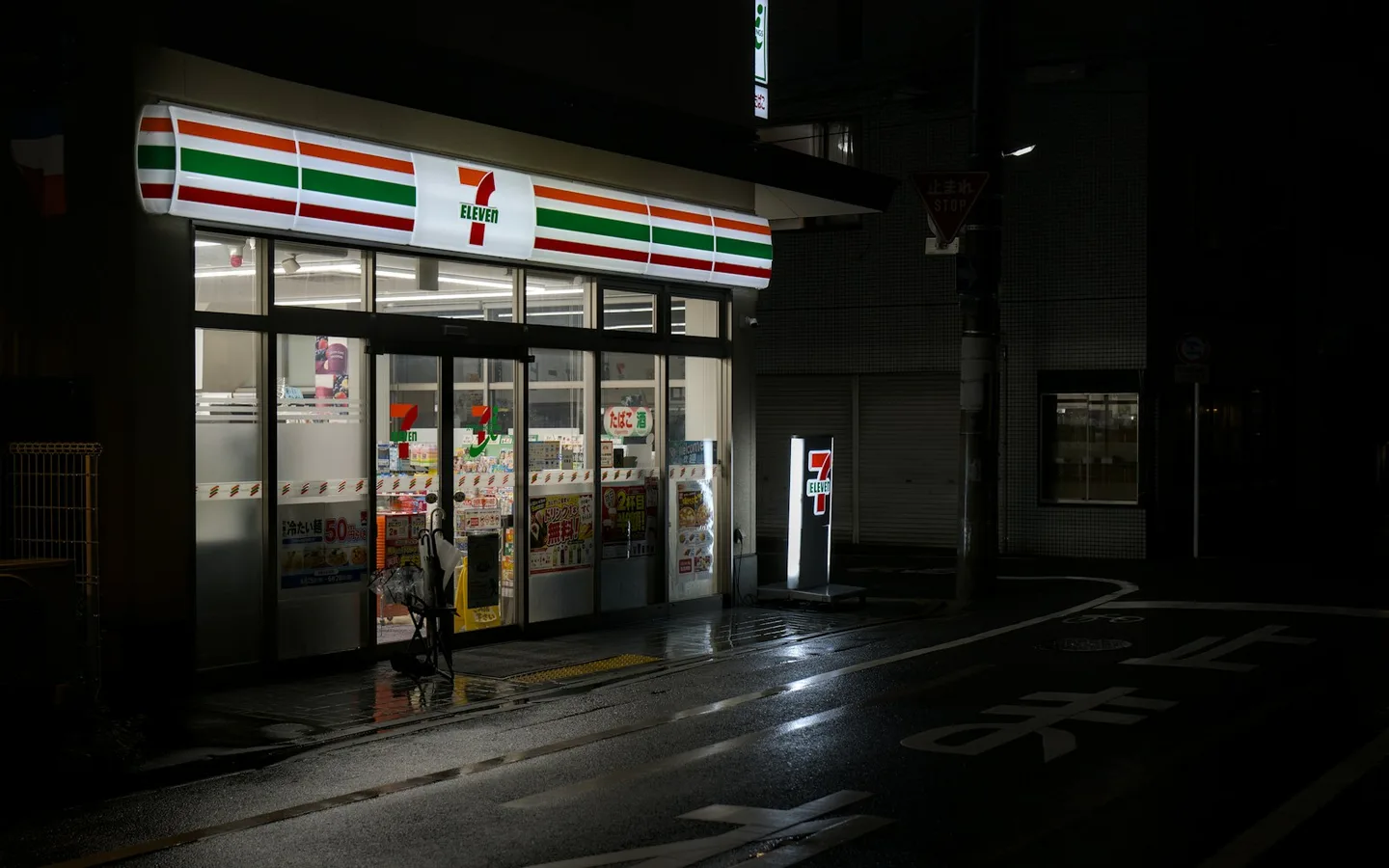
A konbini is a small convenience store that can do more than sell snacks. 7-Eleven, Lawson and FamilyMart are familiar names, but none is a guarantee of a particular toilet, bin, ATM or parcel service. Look at the signs and the actual branch before relying on one for a time-sensitive task.
A quick meal, without guesswork
Choose food and drinks from the shelf or chilled case, then bring them to the indicated register. If the item can be heated, ask before paying or while it is being scanned; the existing question in Useful Japanese below can help. Staff will tell you what is possible. Bags, chopsticks and spoons may be offered or requested at checkout. Some stores have coffee machines, but follow that machine’s cup and payment instructions. For a late arrival, check the branch’s actual hours rather than assuming it is open all night.
More ways a convenience store can help
Food and drinks are the easy starting point. Beyond that, read the signs: a service offered by a chain may not be available at every branch. 7-Eleven and FamilyMart both list several services, but their own pages note location-specific limits. Lawson has the same broad convenience-store role; use the store’s posted information for the service you need.

| What you need | What to check at this store |
|---|---|
| A quick meal | Choose the item, then ask whether it can be heated. Follow the store’s instructions for eating areas. |
| Cash | Look for an ATM that accepts your card’s network. Read the fees and limits before confirming. |
| A document | Check print/copy/scan instructions and supported files. Remove your documents and storage media when finished. |
| A parcel or ticket | Check whether this branch offers the service and whether the specific item can be handled there. |
| A toilet | Look for a customer-use sign or ask. Public access is not guaranteed. |
| A bin | Follow the store’s sorting labels. Bins may be unavailable; do not leave rubbish outside. |
An everyday stop, not just a snack shop
Residents may stop for a drink or an onigiri, pay a bill, print a document or collect a parcel where that service is offered. For a traveler, the same small store can solve breakfast, an unexpected need for toiletries or a late-arrival drink. The food shelves commonly include rice balls, sandwiches, bento, ready meals, sweets and seasonal items; the exact range changes by chain, location and date. That mix of food and small tasks is what makes a konbini useful in daily life.
You have rubbish in your hand. What now?
- Use a bin only when the label matches your item and visitors are allowed to use it. Follow the separation shown at that station, venue, shop or accommodation; there is no single nationwide tourist sorting rule.
- If there is no suitable bin, keep the item with you. A small sealable bag makes this easier until you reach your accommodation or another permitted disposal point.
- Do not assume a convenience-store bin accepts rubbish from elsewhere. Use the branch's signs or ask staff. Never leave a bag beside a full, closed or unavailable bin.
At the checkout, step by step
- 01
Put your items at the indicated checkout
Check whether staff scan them or you should use a self-checkout. Do not assume every register works the same way.
- 02
Choose the extras you need
Ask about heating, a bag or utensils before finishing. Confirm any displayed charge.
- 03
Select an accepted payment method
Use the symbols on that register. Some self-service checkouts have different cash rules. Keep the receipt until you have checked the transaction.
7-Eleven Japan lists card, contactless and other payment options in its visitor guide. This is a useful example, not a promise about every konbini or every foreign card. If a payment fails, ask what alternative the store accepts.
An ATM or a print job: check before starting
For cash, find an installed ATM and compare your card's network with its accepted logos. Seven Bank notes that some overseas cards can still be unavailable despite a matching logo. Read transaction limits and charges, including your issuer's terms. Keep your card, cash and receipt together before stepping away.
For printing, prepare the file in a format the machine supports and follow its connection or upload instructions. Do not assume that staff can access an email attachment for you. Collect every page, log out of any service you used and remove storage media. Fees depend on the selected service and settings; confirm the machine's displayed total.
Our advice: plan a backup for an urgent document rather than depending on one branch. Keep a payment alternative ready, and use Read Japan for a short sign you encounter.
Small things that prevent awkward moments
Watch where the queue begins. Keep calls brief and quiet near the checkout. If you want to photograph an interior, ask first. For a food allergy, a picture or product name alone cannot establish what is safe to eat; ask staff about ingredients and cross-contact. If you still cannot establish whether the food is suitable, do not eat that item; choose another option you can verify. Staff cannot guarantee safety from an uncertain label or preparation process. See the Australasian Society of Clinical Immunology and Allergy's food-avoidance guidance.
If your foreign-issued card fails at checkout, show the existing payment-help phraseOpen a Japanese phrase card. For a general payment question, use the approved “Can I pay by card?” wording in Useful Japanese below.
Useful Japanese at the counter
Can I use the toilet or throw away rubbish at every konbini?
No. Facilities and access vary. Ask at the branch you are using and follow its signs.
Can staff print any document from my phone?
Check the machine’s file, connection and payment instructions. Do not hand over passwords or assume staff can operate your private accounts.
Is one chain better for ATMs or late-night service?
Check the branch and the ATM operator, rather than ranking chains. Supported cards, fees, opening hours and available services can all differ.
Sources & checks
Sources checked 29 Sept 2026. For changing details, confirm with the responsible organization.
- 7-Eleven Japan · Store servicesExamples of ATM, copy/print, parcel, ticket and payment services; location-specific availability · A chain listing is not a promise about every branch.
- FamilyMart · ServicesExamples of copying, ATM, ticket and parcel services with some-store caveats · Japanese source summarized in English; check the actual branch.
- Seven Bank · Overseas-issued cardsOverseas card acceptance, networks, fees and limits depend on card and machine · Check the screen and card issuer before confirming.
- JNTO · Visitor FAQVisitor guidance on disposal and everyday travel questions · Local facility rules still control the bin in front of you.
- GO TOKYO · Responsible travelerPublic bins can be limited; carry rubbish and follow local sorting signs · Tokyo guidance is not a nationwide disposal rule.
- 7-Eleven Japan · Payment guidePayment methods, checkout flow, international-card ATMs where installed